Your Questions, Answered
How do I schedule or reschedule an appointment?
Online: Please follow the dedicated link on our website to book your appointment directly.
Telephone: You are welcome to contact us telephonically on 051 493 3933 during our practice hours.
Email: Alternatively, you can send an email to info@medieye.co.za, and our team will assist you with your scheduling needs.
Telephone: You are welcome to contact us telephonically on 051 493 3933 during our practice hours.
Email: Alternatively, you can send an email to info@medieye.co.za, and our team will assist you with your scheduling needs.
Finding our practice
MediEye by Dr Arno Jansen van Rensburg is conveniently located within Mediclinic Bloemfontein, ensuring easy access for our patients. Our practice can be found in the Quantum Building, Suite C120, at the corner of 3rd Avenue and Zastron Street, Westdene, Bloemfontein, 9301. For clear directions directly to the practice, please see the link provided on our website.
What is your cancellation policy?
To ensure we can best serve all our patients and manage our schedule effectively, we kindly request that you notify us as soon as possible if you need to change your appointment. For cancellations or reschedules, we require at least 24 hours' notice prior to your scheduled appointment time. Appointments cancelled with less than 24 hours' notice, or missed appointments (no-shows), may incur a cancellation fee equivalent to a full consultation fee. This policy allows us to offer the appointment slot to another patient who may be in urgent need of care.
Which medical aids do you accept?
We are pleased to accept all major registered medical aid schemes in South Africa, as well as selected medical aid schemes from Lesotho. We understand that navigating medical aid benefits can sometimes be complex, and our team is always available to assist you with any queries regarding your cover and claims.
Are telemedicine/virtual consultations available?
While we are exploring future possibilities, telemedicine and virtual consultations are not routinely available at present, as comprehensive ophthalmic care often requires in-person examination with specialised equipment.
What’s the difference between an Ophthalmologist and an Optometrist?
An Ophthalmologist (like Dr. Jansen van Rensburg) is a medical doctor (MBChB) specialised in eye and vision care. They are trained to diagnose and treat all eye diseases, perform eye surgery, and prescribe glasses and contact lenses. An Optometrist provides primary vision care, including eye exams and prescribing corrective lenses, and can diagnose common eye conditions, often referring to an ophthalmologist for advanced treatment or surgery.
Will my medical aid cover the cost of my consultation or surgery?
We accept all major registered medical aid schemes in South Africa and selected schemes from Lesotho. While most medical aids cover consultations and medically necessary procedures, cover for elective procedures or premium lens options may vary. We recommend contacting your medical aid directly for pre-authorisation and to confirm your specific benefits.
How long does an appointment typically take?
A comprehensive first appointment can take between 60 to 90 minutes, especially if dilating drops are administered. Follow-up appointments are generally shorter. We aim to be efficient while ensuring thorough examination and personalised discussion.
Is it normal to experience floaters or flashes in my vision?
Occasional floaters can be a normal part of ageing. However, a sudden increase in floaters, especially accompanied by flashes of light or a curtain-like vision loss, requires immediate medical attention as it could indicate a serious retinal condition like a detachment. Please contact us urgently if you experience these symptoms.
Do I need a referral from a GP or Optometrist to see an Ophthalmologist?
While a referral is not always strictly necessary to book an appointment with us, some medical aid schemes may require one for reimbursement. It's always a good idea to check with your specific medical aid plan. If you have been referred, please let us know so we can keep your referring practitioner informed.
What can I expect at my appointment?
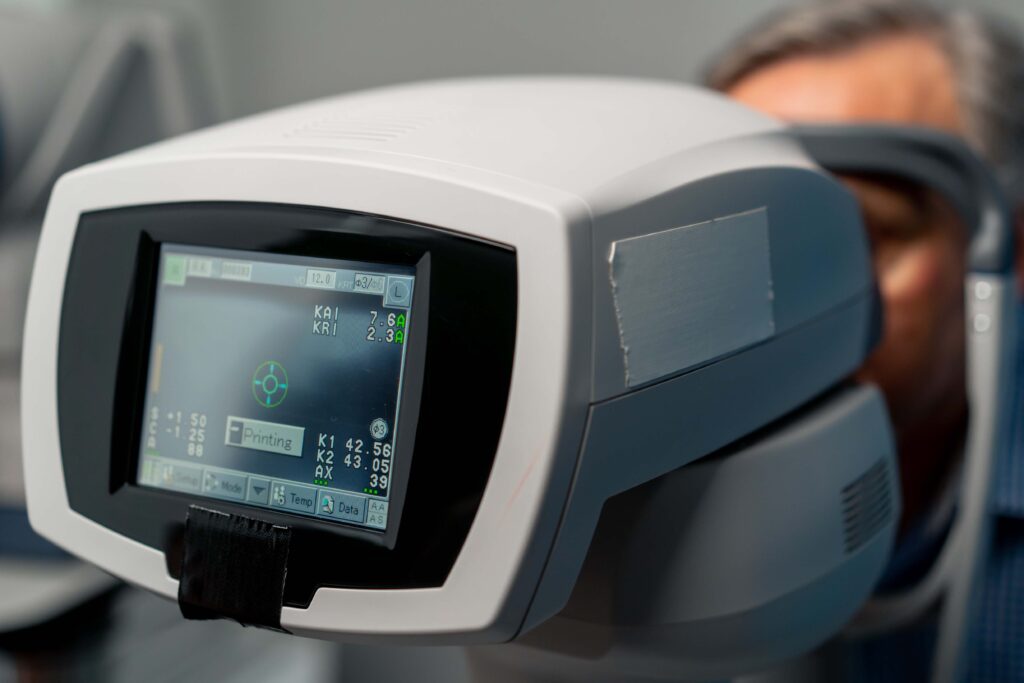
Upon arrival, you'll complete any necessary registration. Your visit will typically include preliminary tests by our ophthalmic assistants, followed by a comprehensive consultation and examination with Dr. Jansen van Rensburg. Depending on your needs, dilating eye drops may be administered to allow for a thorough internal eye examination, which can temporarily blur your vision. We encourage you to ask any questions you may have throughout your visit.
How can I prepare for a surgical procedure?
If you are scheduled for a surgical procedure, our team will provide you with detailed pre-operative instructions specific to your surgery. Generally, this will include guidelines on medications to stop or continue, fasting instructions, and arrangements for transport home. We encourage you to ask any questions you have during your pre-operative consultation to ensure you feel fully prepared and confident.
How is cataract surgery performed, what are the risks, and what are its benefits?
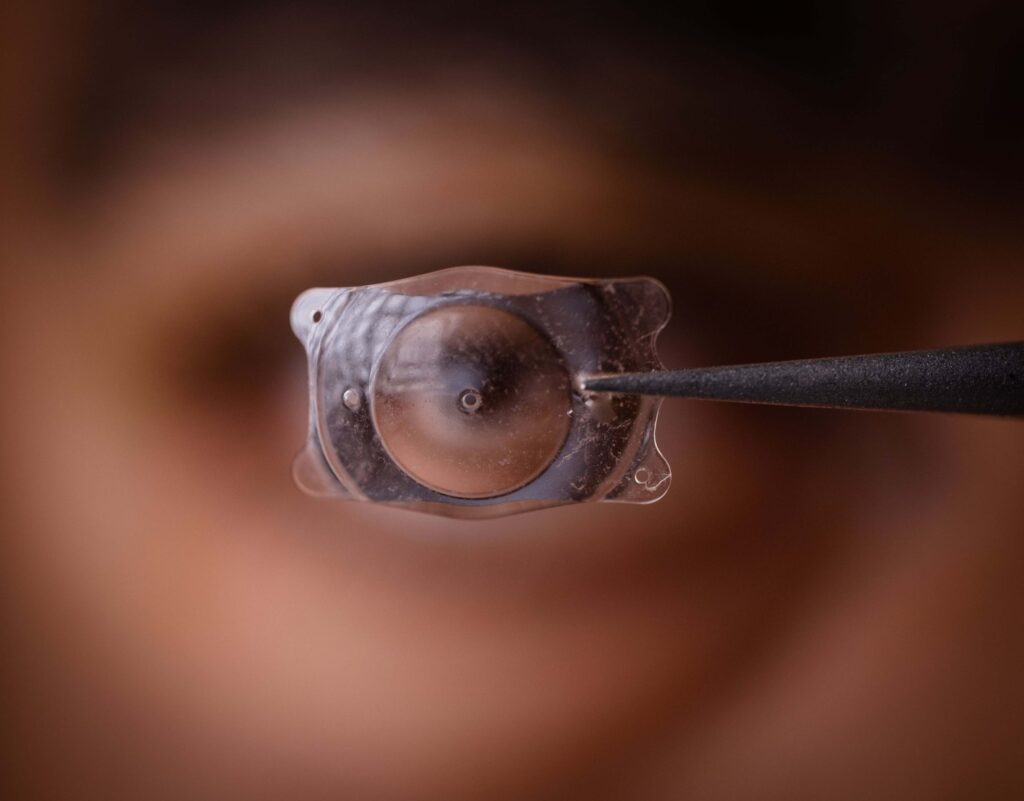
Cataract surgery is a common and highly effective procedure where the cloudy natural lens of your eye is gently removed and replaced with a clear, artificial intraocular lens (IOL). Performed under local anaesthesia as a day procedure, it typically involves a small incision through which the cataract is emulsified (broken up) using ultrasound and then removed, with the new lens carefully inserted. The primary benefit is restored clear vision, improving your ability to read, drive, see colours more vibrantly, and enhance your overall quality of life. While highly successful, like any surgery, there are minimal risks, including infection, inflammation, or, very rarely, retinal detachment. These will be thoroughly discussed with you during your consultation to ensure you are fully informed.
What does a routine examination cost?
The cost of a routine eye examination aligns with the standard rates for specialist consultations, and we are committed to providing excellent value and accessible care within the region. For patients utilising medical aid, the cost is typically covered according to your specific plan's benefits. For private or cash-paying patients, we strive to maintain competitive rates that reflect our dedication to making high-quality ophthalmic care available. For the most accurate and up-to-date pricing information relevant to your circumstances, please do not hesitate to contact our practice directly. Our administrative team will be happy to assist you with any financial queries.
Our Contacts
Working Hours
Monday to Friday
o8:00 AM - 6:00 PM
Saturday
08:00 AM - 12:00 PM